Posted by Visio Guy on 29th March 2008 - 1179 views
Recently we were introduced to the Cisco IP Telephone Shapes, and learned how they could be improved in the article: Making Shapes More Efficient: Using Fewer Shapes & Groups.
Today we're going to focus on what happens when the Cisco shapes get resized, and discuss a technique for making the lineweight proportional to the size of the shape.
Read the rest of this entry »
Posted in Development, ShapeSheet | 7 Comments »
Posted by Visio Guy on 28th March 2008 - 1334 views
You may have read our recent post on Cisco IP Telephone Shapes, and perhaps downloaded the shapes. While give-aways and freebies are nice, we at Visio Guy like to go further. We like look behind-the-scenes and talk about Visio development-related issues in order to give our readers a deeper understanding.
Before we released the Cisco IP Telephone shapes, we performed a number of tweaks to make them more efficient and better behaved. This article discusses a few of those operations--the whys and hows of making your shapes more efficient, and some tricks for ensuring proper resize behavior!
Read the rest of this entry »
Posted in Development, ShapeSheet | 3 Comments »
Posted by Visio Guy on 27th March 2008 - 4975 views

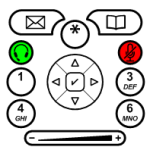
One of our Visio Guy readers recently sent us some very well-drawn shapes for Cisco IP Telephone buttons. Let's all send a warm thank you very much to Art Braune for adding to the quality and usefulness of this site!
Art told me he would send me a blurb, describing how he uses the shapes, but I thought I'd take a guess. After quickly Google-ing for Cisco IP Telephone, but without reading too much, I surmised that this thing is highly customizable. So it would make sense that IT departments would want to document how they had modified the phone, then send out a quick-reference card (or booklet) to company employees.
Read the rest of this entry »
Posted in Network | 3 Comments »